
Walkway Installation Connecticut, CT
Professional walkway installation in Connecticut built to withstand winters.
Local Walkway Installation Expertise
In Connecticut, walkway installation requires precision and durability. Freeze-thaw cycles, seasonal moisture, and variable terrain demand materials and techniques that withstand harsh winters. We build walkways that stay safe, level, and functional year after year.
How We Work
We walk through every step with you. From initial assessment to final inspection, you'll know exactly what's happening and when completion arrives.
Site Assessment
We evaluate soil, drainage, slope, and existing conditions. This tells us the right material and depth for Connecticut's climate.
Material Selection
We recommend materials suited to your property and local conditions. Stamped concrete, pavers, natural stone—we discuss durability and maintenance.
Preparation & Grading
We excavate, compact subgrade, and install base layers. Proper grading prevents water pooling and frost heave damage in winter.
Installation & Finishing
We lay material to code, set edges, and add finishes like sealing or sand-setting. Every detail protects against settling and water infiltration.
Final Inspection
We check slopes, spacing, surface finish, and drainage. You walk the completed walkway before we call it done.
You'll always know what's happening next—and when.
Our Services
Walkway installation is our foundation. We also handle complementary masonry services that strengthen your property.
Concrete Walkways
Concrete walkways are durable and cost-effective for Connecticut homeowners. We pour and finish to slope properly for winter drainage. Stamped or colored options add visual appeal while maintaining strength through freeze-thaw cycles.
Fairfield County properties benefit from our experience with local soil and water table conditions. We seal surfaces to resist salt and de-icing products.
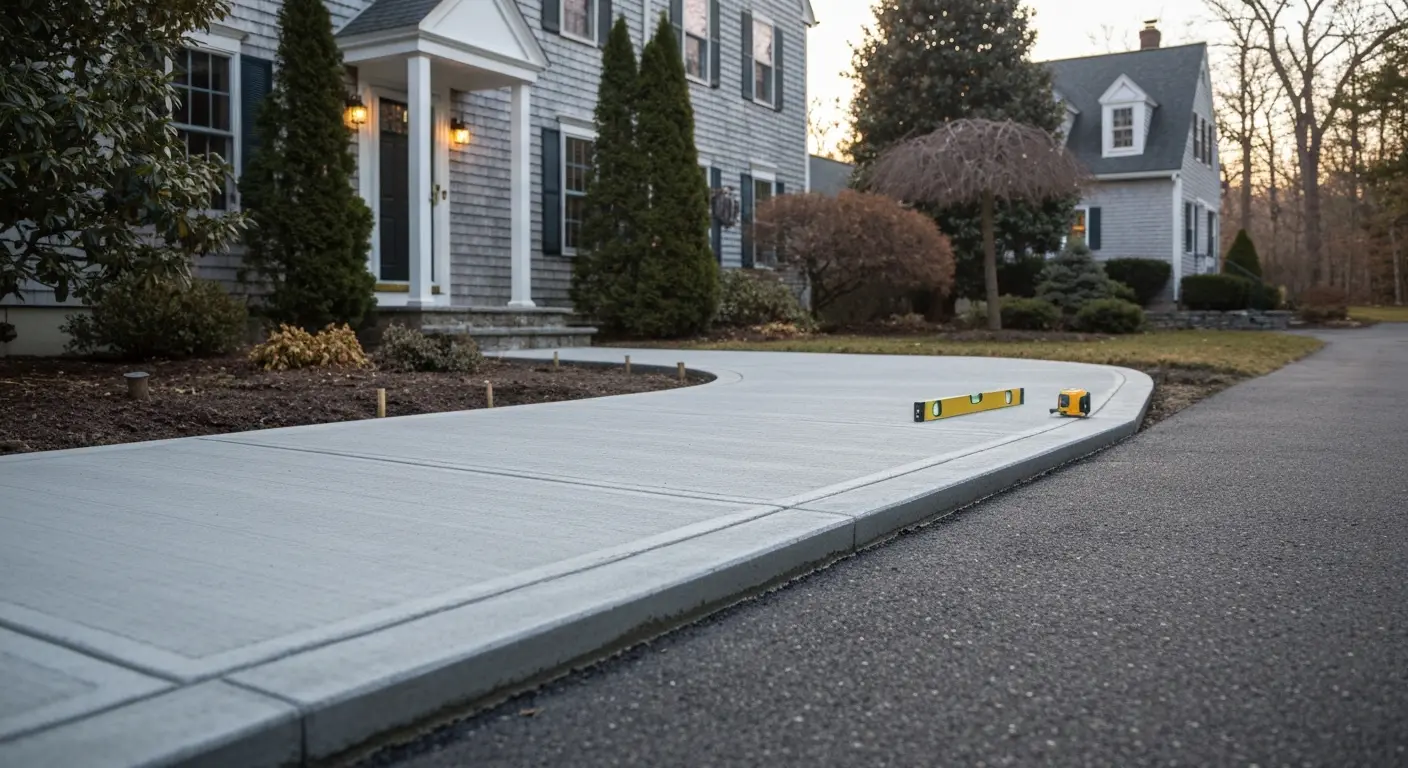
Finished concrete walkway in Fairfield County with proper slope for drainage.
Paver Stone Walkways
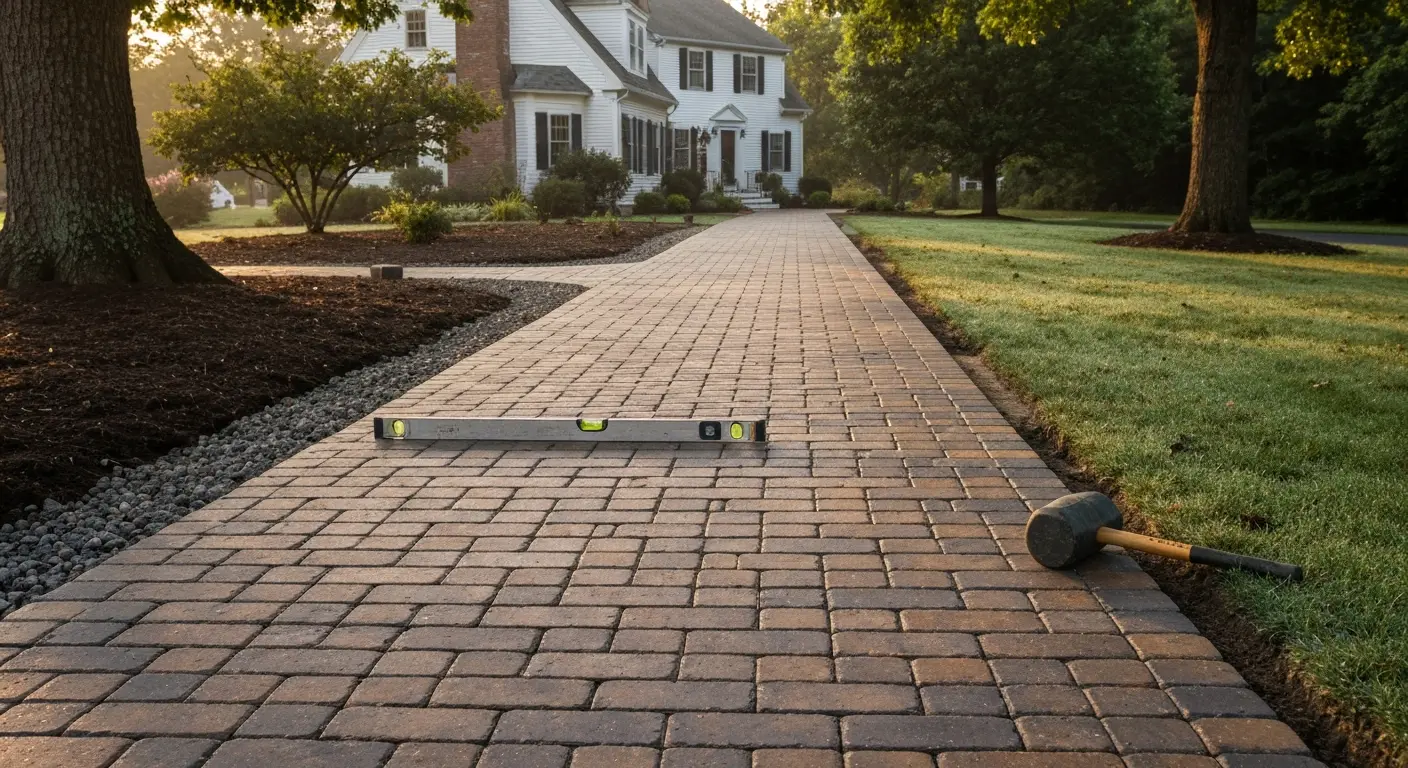
Interlocking paver walkway in Hartford County with permeable base.
Pavers offer design flexibility and individual stone replacement if needed. We set them on compacted base with proper spacing and sand. Each stone locks together to handle Connecticut's ground movement and moisture.
Hartford County clients appreciate the clean appearance and ease of maintenance. Permeable options manage stormwater naturally.
Natural Stone Walkways
Natural stone—slate, flagstone, bluestone—creates timeless walkways. We source materials suited to Connecticut's landscape and set them on solid, frost-proof bases.
Stone adapts beautifully to uneven terrain. We fit each piece to its neighbors, ensuring safe footing and minimal water pooling across seasons.
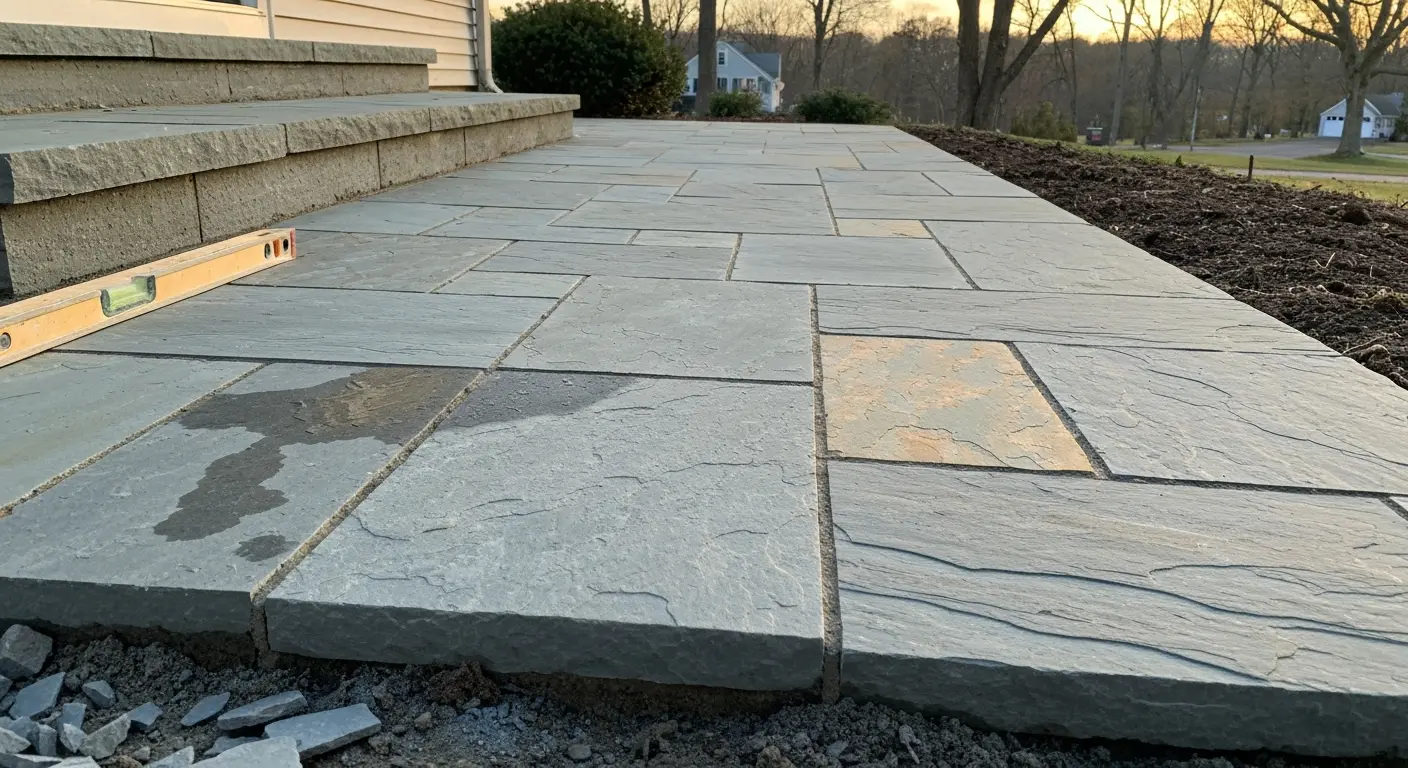
Slate flagstone walkway in Connecticut showing natural texture and drainage.
Retaining Walls & Steps
Sloped Connecticut properties need safe steps and retention. We build stone or block walls to manage elevation changes and prevent erosion during heavy rain and snowmelt.
Steps integrate with walkway grade for smooth transitions. We install proper drainage behind walls and use frost-proof footings below the Connecticut winter frost line.
Drainage & Base Preparation
Poor drainage is the enemy of walkway longevity. We excavate, slope surfaces, and install base layers to shed water away from your property.
Connecticut's spring thaw and heavy winter snow demand robust subsurface work. We use permeable bases, French drains, and proper grading to prevent frost heave and settling.
Why It Matters
Connecticut walkways face real challenges. Building them correctly protects your home's foundation, reduces slip-and-fall risk, and adds decades of life to your property.
Freeze-Thaw Damage Prevention
Connecticut winters drop well below freezing. Water seeps into poorly built walkways, freezes, and expands. This cracks concrete and heaves pavers within a few seasons.
We install walkways below the frost line with proper drainage. Our bases shed water fast. Sealed concrete and well-set pavers resist the push and pull of freeze-thaw cycles.
Safety & Accessibility
Uneven, cracked walkways cause trips and falls. We build surfaces that stay level and create accessible routes for visitors, elderly guests, and families with young children.
Connecticut property owners reduce liability and improve daily usability when walkways are safe, well-lit, and properly graded.
Property Value & Curb Appeal
First impressions matter. A finished, well-maintained walkway signals that you care for your property. Buyers notice clean hardscaping and safe entry paths.
Custom stonework, good drainage, and professional grading add visual weight to your home's exterior. Smart walkway choices complement landscaping and architecture.
Serving Connecticut and Surrounding Areas
We've built walkways across Connecticut for two decades. From Fairfield County shoreline properties to Hartford County residential neighborhoods, we understand local soil, code, and weather.
Local Knowledge & Compliance
Connecticut building codes specify frost depth, slope, and material standards. We follow local rules and pull permits where required. Your walkway will pass inspection and withstand scrutiny.
Each town has unique drainage requirements and soil profiles. We know how to read your property and build accordingly.
Service Areas Across Connecticut
We serve all of Connecticut, including Fairfield, Hartford, New Haven, Tolland, and Windham counties. Whether your property is in a coastal village, suburban neighborhood, or rural town, we bring the same professionalism and attention to detail.
- Fairfield County coastal and suburban properties
- Hartford County residential neighborhoods
- New Haven County mixed-density areas
- Tolland and Windham rural properties
Ready to Build Your Walkway?
Contact us today for a free site assessment. We'll discuss your needs, review your property, and recommend the best material and approach for your Connecticut walkway.
Let's build a walkway that lasts through Connecticut winters and beyond.
Best Practices for Connecticut Walkway Installation
What makes a walkway last in Connecticut? Here's the full story.
How Do You Install a Walkway That Won't Crack or Heave in Connecticut Winters?
Install below the frost line with robust subsurface preparation and proper drainage. Freeze-thaw cycles move water through and under walkways—if water sits, it expands when frozen and breaks surfaces apart.
- Excavate to 4–6 inches below local frost depth (typically 36–48 inches in Connecticut).
- Compact native soil; add 4–6 inches of gravel or crushed stone base.
- Grade surfaces to slope at least 1:10 (1 inch drop per 10 inches of run).
- Use proper sand or bedding under pavers; reinced concrete under slabs.
- Seal concrete or apply sand-lock to pavers to reduce water entry.
- Maintain drainage year-round; clear leaves and debris from surfaces.
- Re-seal concrete every 2–3 years.
Proper base work is invisible but essential. That's where durability lives.
Frequently Asked Questions
Common questions about walkway installation in Connecticut
How deep do walkway footings need to be in Connecticut?
Walkways should be excavated to 4–6 inches below the local frost line. Connecticut's frost depth ranges from 36–48 inches depending on location. Footings below this depth prevent frost heave and settling.
What's the best material for a Connecticut walkway?
Concrete, paving stones, and natural stone all work well if properly installed. Choice depends on your budget, aesthetic preferences, and terrain. We recommend concrete for durability, pavers for design flexibility, and natural stone for high-end appeal.
How much slope should a walkway have?
A slope of at least 1:10 (one inch drop per ten inches of run) sheds water quickly. Steeper slopes improve drainage but may create an uneven feel underfoot. We grade to local code and your property's terrain.
Do I need a permit for a new walkway in Connecticut?
Permit requirements vary by town. We handle permit research and filing for your project. Contact us before starting—skipping permits can create liability and resale issues.
How long does a well-built Connecticut walkway last?
With proper installation and maintenance, concrete lasts 25–40 years, pavers 30–50 years, and natural stone 50+ years. Regular sealing and drainage maintenance extend all timelines.
Can you repair an existing cracked or heaving walkway?
Yes. We assess damage, dig if needed to address subsurface issues, and either repair or replace sections. Frost heave often signals drainage problems—we fix the root cause, not just the surface.
DISCOVER WHAT OUR CUSTOMERS HAVE TO SAY ABOUT US
REVIEWS
proudly serving these areas
Connecticut, CT
READY TO take the next step?
get a free quote TODAY!
QUICK LINKS
our services
service areas
operating HOURS
Mon: 6:00 am - 6:00 pm
Tue: 6:00 am - 6:00 pm
Wed: 6:00 am - 6:00 pm
Thu: 6:00 am - 6:00 pm
Fri: 6:00 am - 6:00 pm
Sat: 6:00 am - 6:00 pm
Sun: Closed - Closed